Free calculator

Ceramic hob electricity use

Calculate cooking electricity cost using selected zone power, daily minutes and average load.

✓ Usage by minutes✓ Adjustable average load✓ Direct comparison
Your inputs

Power, time and tariff

Updates instantly
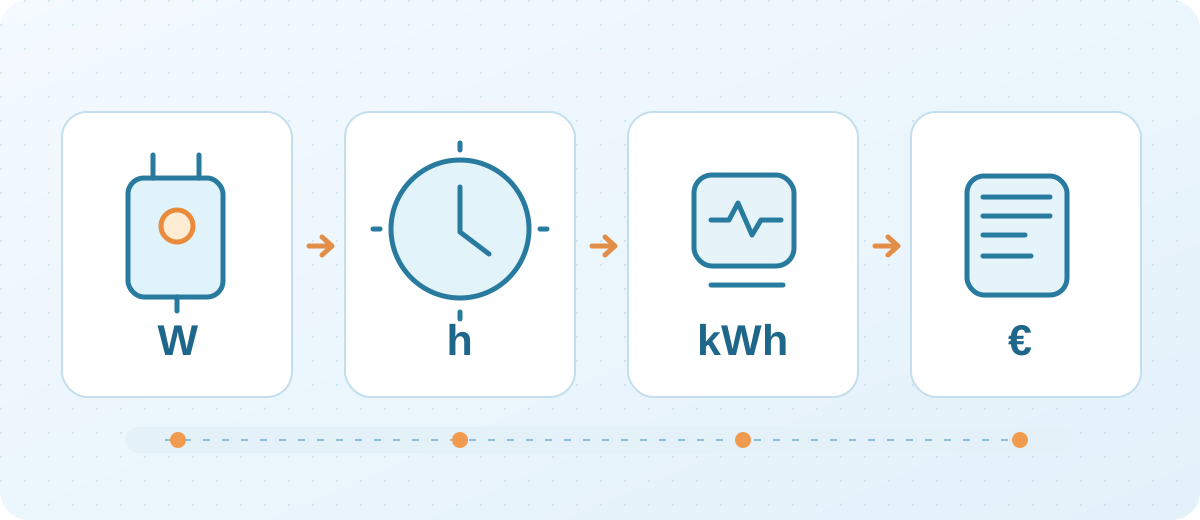
Indicative diagram of this calculator inputs
Cost depends on real power draw, usage time and the price per kWh.

How we calculate consumption

We convert power to kilowatts and time to hours. Average load approximates the on/off cycling of the heating element.

W ÷ 1000 × (minutes ÷ 60) × load × days × €/kWh

It does not run at maximum continuously

Once the zone reaches temperature, the element switches on and off. Average load therefore gives a more realistic estimate.

Use residual heat

A ceramic hob stays hot after switch-off, so finishing cooking with residual heat can reduce powered-on time.

Average load matters more than the zone's maximum rating

A ceramic hob cycles its heating element on and off to maintain the selected setting. That means a 1,800 W zone does not necessarily draw 1,800 W continuously for the whole cooking period.

Residual heat changes how you should count time

Radiant ceramic zones stay hot after the element switches off. For suitable dishes, reducing power before the end of cooking or using residual heat can lower powered-on time while the pan continues to receive heat from the glass surface.

Compare the same cooking task

If you are comparing ceramic and induction, use the same recipe, pan size, quantity of food and electricity price. A useful comparison looks at kWh needed to finish the task, not just rated zone power.

See induction vs ceramic hob for a broader comparison, and use the current electricity price if you are estimating cost in Spain.

Editorial review: 11 Oct 2026. Real consumption depends on cycling, cookware, power setting and cooking time.

[executed on device: Jaime (5124b6c9-376b-492f-9fed-bcf2d94f742b)]