
What you need to know
- Condensation is often linked to humid air and cold surfaces; water ingress is linked to water entering from outside or from a service.
- Location and timing provide clues: after rain, during bathroom use, beside pipework or at thermal bridges.
- A dehumidifier can reduce indoor humidity but cannot repair a leak or water ingress.
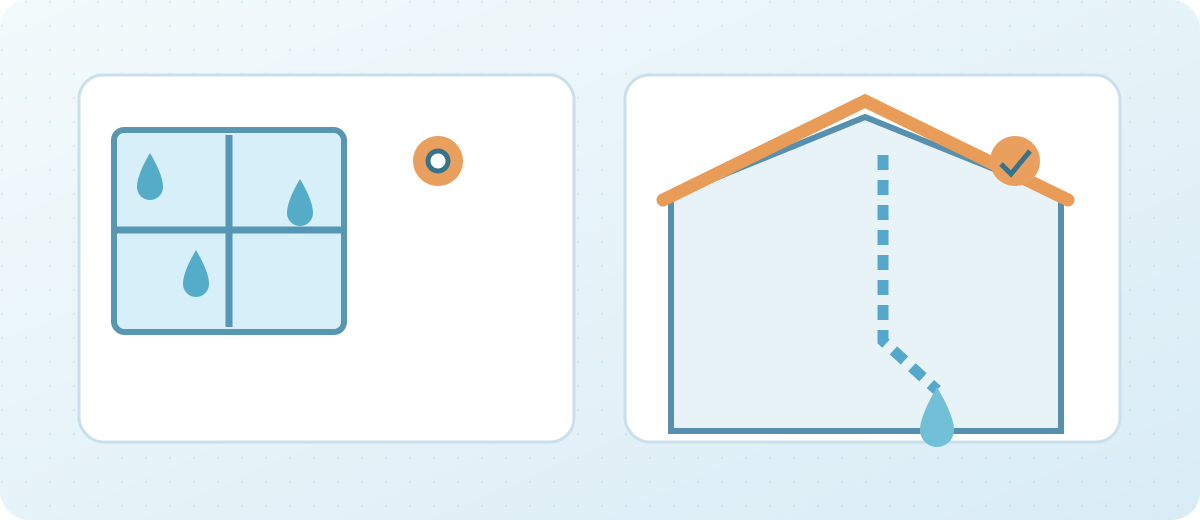
Signs compatible with condensation
Condensation often appears on cold surfaces, corners, external-wall junctions, around windows or behind furniture with little airflow. It can worsen in winter, after showers, cooking or drying clothes and may coexist with misted windows.
That does not prove the diagnosis, but points towards indoor humidity, ventilation, insulation or surface-temperature issues.
Signs compatible with water ingress or a leak
A stain that appears or grows after rain, near a terrace, roof, façade or external junction may indicate water ingress. If it is close to pipes, drains or appliances and changes with use, a leak is possible.
Simple checks before repairing
- Photograph the stain with dates and compare after rain and dry periods.
- Measure indoor relative humidity over several days.
- Check whether ventilation or heating changes the pattern.
- Look for unusual water-meter movement with all outlets closed.
- Inspect visible seals without dismantling services.
What not to do
Do not simply apply “anti-damp” paint and expect the cause to disappear. Do not seal a suspected ingress path blindly either; water can move elsewhere or hidden damage can continue.
When to call a professional
If the stain grows, returns after repair, affects ceilings or electrics, causes strong odour, deforms timber or cannot be linked to an obvious cause, diagnose it before spending more on finishes.
Frequently asked questions
Does mould always mean condensation?
No. Mould needs moisture, but that moisture can come from condensation, leakage, water ingress or other sources.
Will a dehumidifier fix water ingress?
It can lower airborne humidity and assist drying, but it does not stop water entering.
Can I paint once the stain looks dry?
Only after the cause has been solved and the substrate is sufficiently dry and stable for the paint system.
Continue with these tools
Use location and timing to narrow the moisture cause
Window condensation, rain ingress and plumbing leaks can all leave dark spots or mould. Treat the pattern as evidence rather than choosing a repair just from the appearance of a stain.
Example to adapt
A patch that worsens after wind-driven rain may suggest external ingress; one that appears behind wardrobes during cold nights can be consistent with condensation. Record temperature, relative humidity and rain at the same time each day, and compare whether the affected surface dries in between.
| Pattern | Possible explanation | Next observation |
|---|---|---|
| Cold corners each morning | Condensation or thermal bridge | RH, ventilation, surface temperature |
| After heavy rainfall | Ingress through envelope | External joints, roof or facade |
| Near pipework at any time | Plumbing-related moisture | Meter and qualified leak assessment |
Checks before acting
- Never cover a damp wall with an impermeable finish until the source is resolved.
- Check for blocked ventilation and persistent indoor moisture sources.
- Take dated photographs and compare boundaries, not just stain colour.
- Escalate persistent mould, hidden damp or water near electrics to suitable professionals.
Keep a useful record: Record weather, room humidity and temperature, stain location, photos and any appliance or water use.